Getting to know your new Berlin neighbourhood
When you have just moved to Berlin, your most useful first walk may begin outside your own door. Follow the routes that will become part of daily life: the station, a place to shop and somewhere you would enjoy taking a break. Add one local story. That gives you both practical orientation and a reason to care about the area.
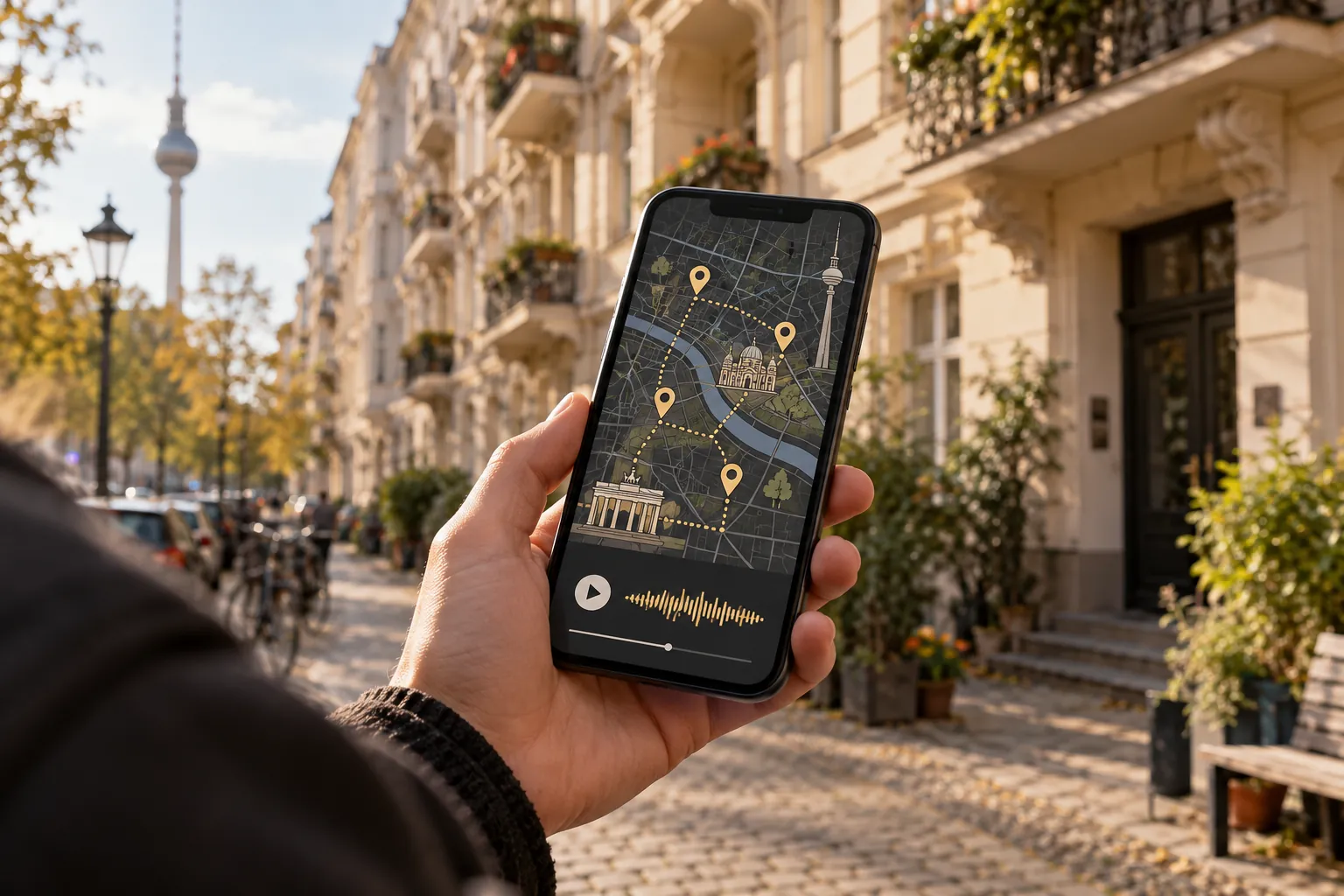
Start with the journeys you will repeat
Choose a manageable endpoint instead of trying to cover an entire district. You can learn plenty by taking one unfamiliar turn off your usual route and paying attention to what is there.
Write down three questions before leaving. Where is the most convenient station entrance for me? Where could I sit outside? Which street would I like to explore more slowly? If the walk depends on visiting a particular shop or facility, check its current opening information directly.
Repeat part of the route at another time of day. A busy shopping street on Saturday and the same street on an evening journey home can feel quite different. One visit gives you an impression, not a complete account of neighbourhood life.
Let one detail lead to a story
Look for something you cannot immediately explain: an old sign, an industrial building or a square that seems unusually large. Turn that observation into a question. What was made here? Why is the building set back from the road? Specific questions are easier to remember than a long list of dates.
visitBerlin's Going Local material provides ideas across the city's neighbourhoods. Use it to choose something relevant to you. The street you will walk along every week can be more rewarding than a famous attraction across town.
Fit an audio story into the walk
Find a place where you can stop and look around while listening. Afterwards, leave some of the walk unplanned. You do not need to turn an introduction to your neighbourhood into a lengthy lesson.
KiezWalk presents stories linked to locations. Check whether the area you have chosen has suitable content before building your route around it. If you prefer to investigate a detail yourself, start with our guide to finding history where you are standing.
Make a small map of your own
After the walk, save three places: one useful, one enjoyable and one that raises a question. Add a sentence to each. “A place for a quiet break after work” will mean more in a month than an unexplained pin.
Next time, connect those places and add a new side street. Our self-guided Berlin walk planner helps keep the route manageable, while the guide to recording walk memories suggests a simple note format. Familiarity grows from small journeys you have a reason to repeat.