Recording memories from a walk without spending it on your phone
A useful memory of a walk often needs only a photograph, an address and a sentence. Record what caught your attention or the question you would like to pursue later. A small, understandable note is more valuable than a large collection of images you can no longer place a few weeks afterwards.
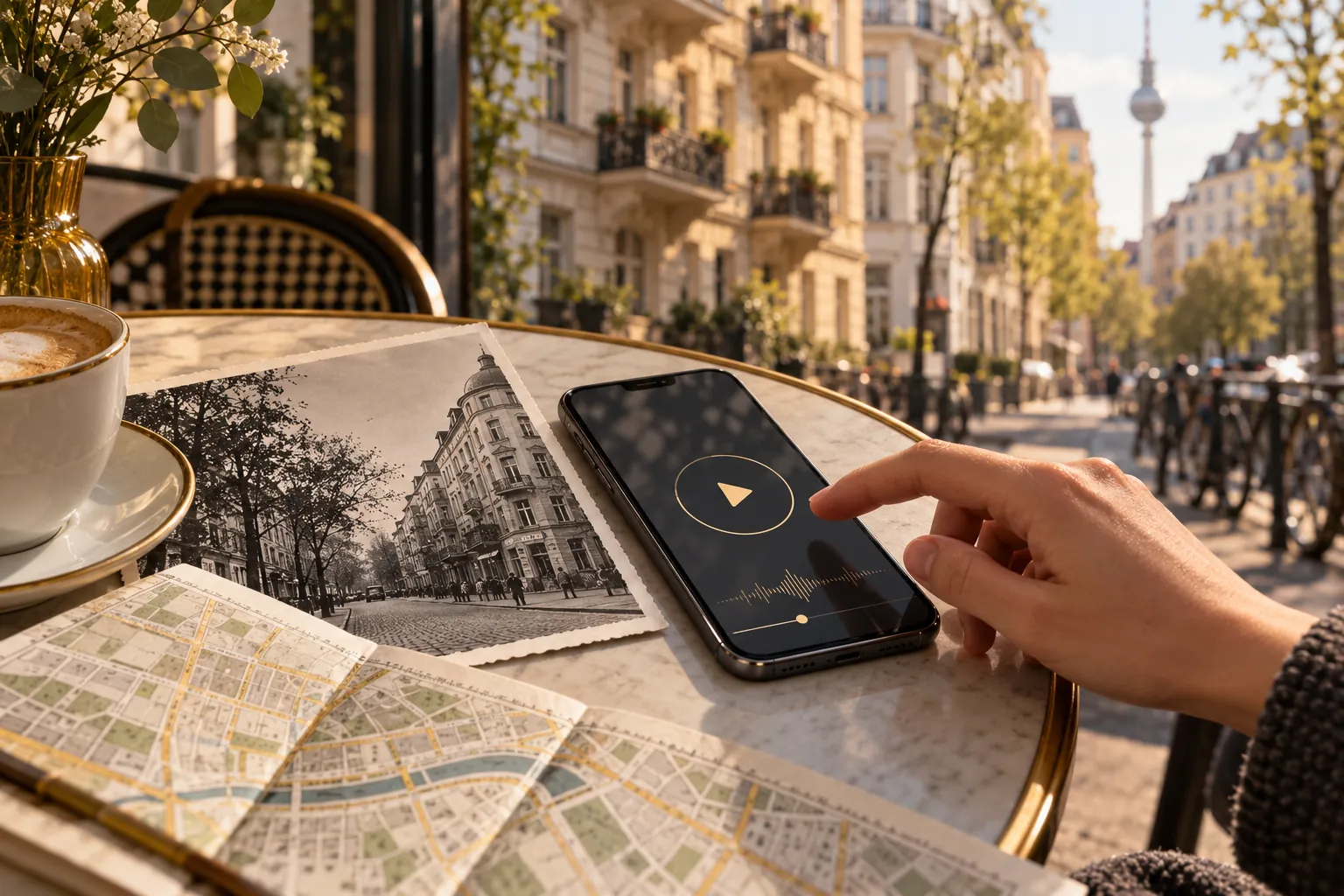
Decide what to keep at the end of a stop
You do not have to document the outing continuously. Look and listen first. If a detail remains interesting, give it a moment before leaving. This lets the place, rather than the camera, determine your attention.
Try a simple format: place – observation – question. For example: “Corner entrance, two different stone types visible; check later whether there was an alteration.” The visible observation remains separate from an explanation you have not established.
Save the source with the discovery
If information comes from a recording, panel or website, note its origin. For online objects, the individual record is more useful than an institution's homepage. The Berlin Museum collection overview, for example, leads towards holdings where you can continue a specific search.
For old images, the guide to historical street photographs adds the relevant checks. Keep dates and inventory references where available. That lets you distinguish later between what you saw yourself and what you learned from a source.
Keep only the notes that matter
After the outing, choose a surprising discovery, a place to revisit and an unanswered question. If only one of those matters to you, keep just that. Requiring a minimum number would turn a useful habit into unnecessary work.
An ordinary notes or photo application is sufficient. You do not need a dedicated note feature inside the audio guide, and should not assume one exists without checking. The guide to rediscovering Berlin as a local shows how a saved question can become the starting point for another walk.
Tidy up before sharing
Clarify vague location details and distinguish established information from guesses. If you want to publish historical images belonging to others, check the rights and usage information attached to the object. Your own photograph and an archive image do not automatically have the same conditions.
Our local-history source checklist provides a short review. Your notes do not need to become a travel article. It is enough for them to bring the place back to mind and make a future visit more rewarding.