How to find historical photographs of Berlin streets
To find an old photograph of a Berlin street, start with an address, a former street name or a recognisable building. Search an institutional collection and save the date, description and source alongside any promising result. Those details turn a similar-looking streetscape into something you can meaningfully compare with the present-day view.
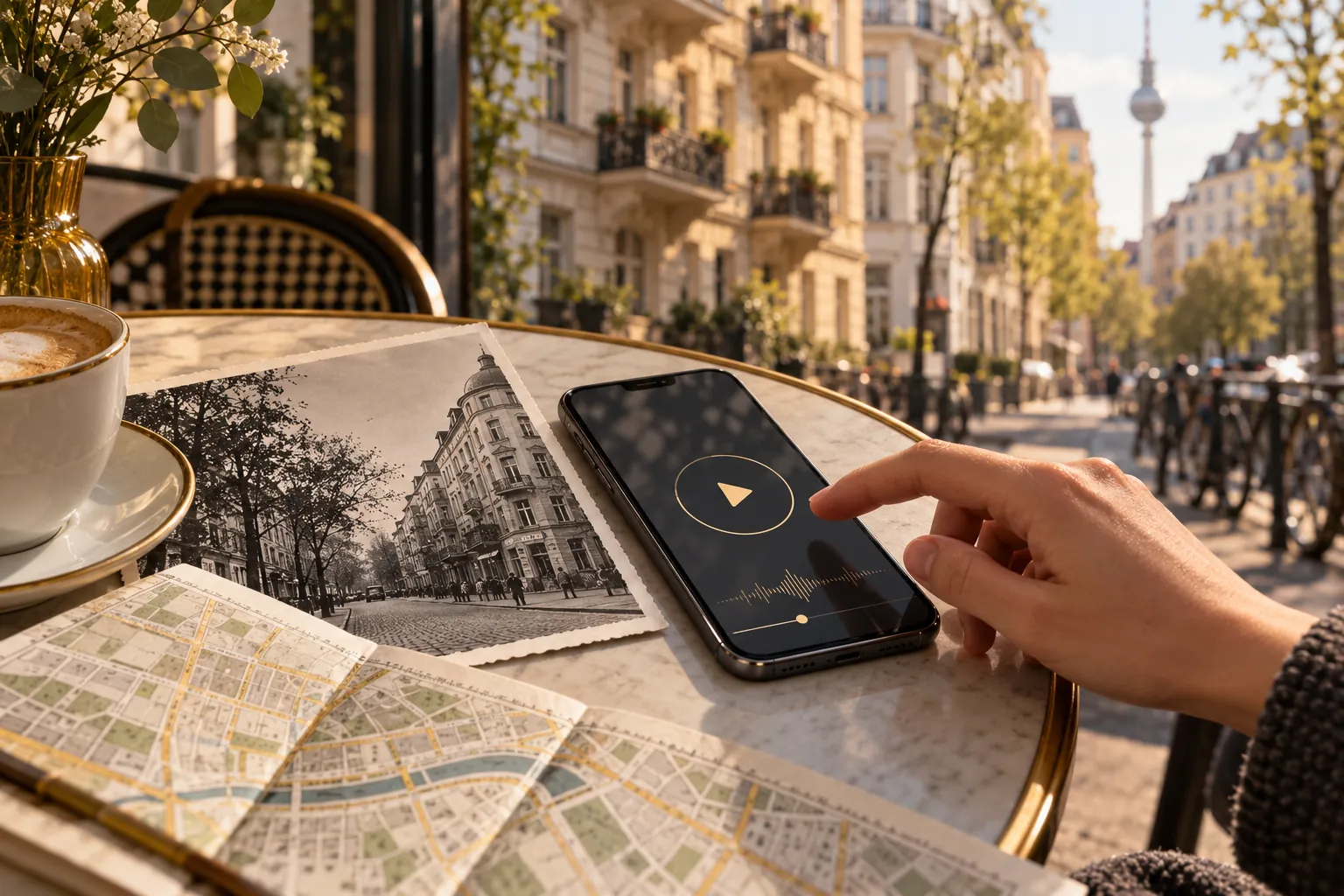
Search for a place, then vary the wording
Write down the current street name, house number and nearest junction. Include the building's name if you know it. A photograph of a factory entrance, for example, might be catalogued under the company or the whole site rather than the street facing the gate.
Try several combinations: the street alone, the street and junction, or the building and its former use. An empty result does not prove that no photograph exists. The description may use different wording, or the material may not be available online. Our guide to Berlin street-name history explains another useful line of enquiry.
Begin with collections that provide context
The Berlin Museum collection overview links to digital holdings and further research services. The Landesarchiv Berlin also holds photographs and other sources documenting the city. Continue to the individual record; an institution's homepage cannot establish the identity of a specific image.
For each useful result, keep:
- the image title or description;
- its date or stated date range;
- the photographer or other attribution, where provided;
- the inventory reference and link to the actual record.
A screenshot with no accompanying information is difficult to verify later. One properly recorded image is often more useful than twenty unlabelled thumbnails saved on your phone.
Work out where the photographer stood
Start by comparing street junctions and building corners. Then look at window arrangements, roof shapes and entrances. Shopfronts or trees can help, but they may have changed more substantially than the street layout.
If the picture seems wrong, consider whether you are viewing the street from the opposite direction. Cropping can also remove the detail that would make the location obvious. Separate what you can establish from what you are inferring: “probably looking north” is a better note than an unsupported certainty.
Keep viewing and publishing separate
At the location, open the collection record and take your own comparison photograph. If you later want to publish the historical image, check the object's stated rights and usage information first. A download button on its own does not answer the reuse question.
Finish the comparison with three observations: what remains, what has disappeared and what the photograph cannot tell you. The guide to checking local history sources helps with interpretation. For a practical way to keep your photographs and references together, see recording memories from a walk.