Exploring Berlin's industrial history on foot
For an industrial-history walk in Berlin, choose one site and a concrete question: what was made here, what kind of building did that require, and what remains visible? A former factory can be interesting without being open to visitors. Begin by planning views from public areas rather than assuming access to the grounds.
One possible focus: the AEG turbine hall
The Berlin Centre for Industrial Heritage identifies the AEG turbine hall on Huttenstraße in Moabit as a 1909 design by Peter Behrens and Karl Bernhard. The relationship between its architecture and production purpose offers a useful theme for an exterior stop.
From a publicly accessible position, examine the proportions and window areas. What might large machinery require from a building? Keep your first ideas as questions and compare them with the historical account afterwards. A present-day view cannot reveal every past working process.
Look around the site before travelling further
Instead of adding another factory across the city, examine the chosen site's relationship to roads, waterways and surrounding buildings. These connections can make industrial history easier to understand spatially.
Separate a visible clue from a documented use. A broad gateway may catch your attention, but its function in a particular period still needs evidence. Our architecture-walk guide provides further observation questions you can use without pretending to identify everything from appearance.
An exterior view is different from an organised visit
A place appearing on a heritage map does not invite you to enter an operating site. If you want a tour, check the operator's current programme and access requirements. Include an interior visit only when it is explicitly available.
Apply the same care to recordings. Check whether a story addresses this particular location. A broad account of industrialisation may provide context, but it is not evidence about an individual hall or company.
Compare past and present with one image
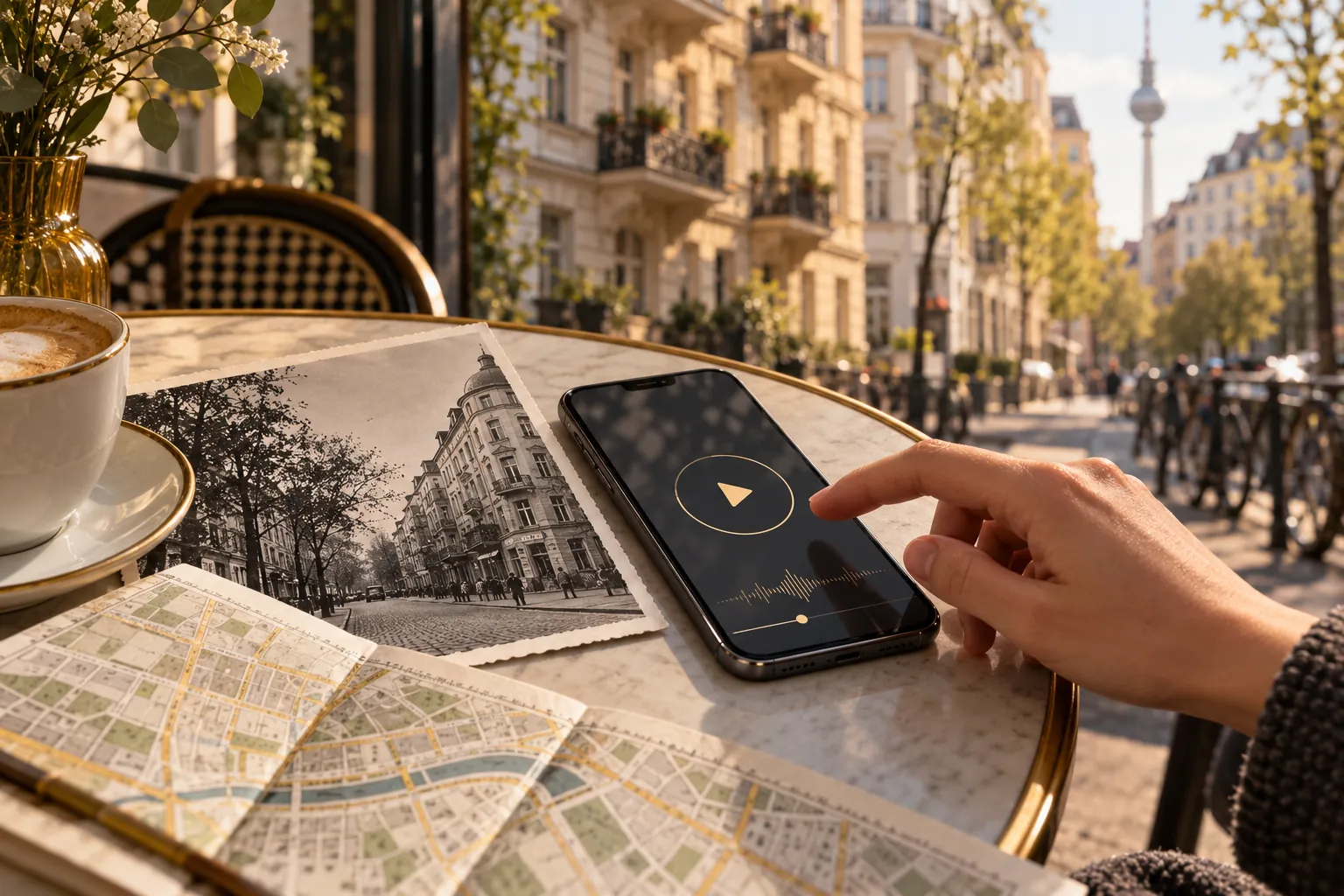
Find a dated historical view and record its source. Compare gateways, rooflines or neighbouring structures with what you can see now. The guide to finding old Berlin photographs explains a practical approach.
When writing your own account of the walk, distinguish observations from researched statements. Our local-history source checklist helps you do that. An industrial walk does not need a succession of spectacular abandoned sites. One building can be enough to explore the connection between work, engineering and the shape of a city.