A Berlin architecture walk: learning to read buildings
You do not need specialist training to enjoy an architecture walk in Berlin. Choose two or three buildings in a compact area and compare visible features: entrances, windows, materials and their relationship to the street. Then look up their history in reliable records. This separates what you can observe from guesses about a building's age or style.
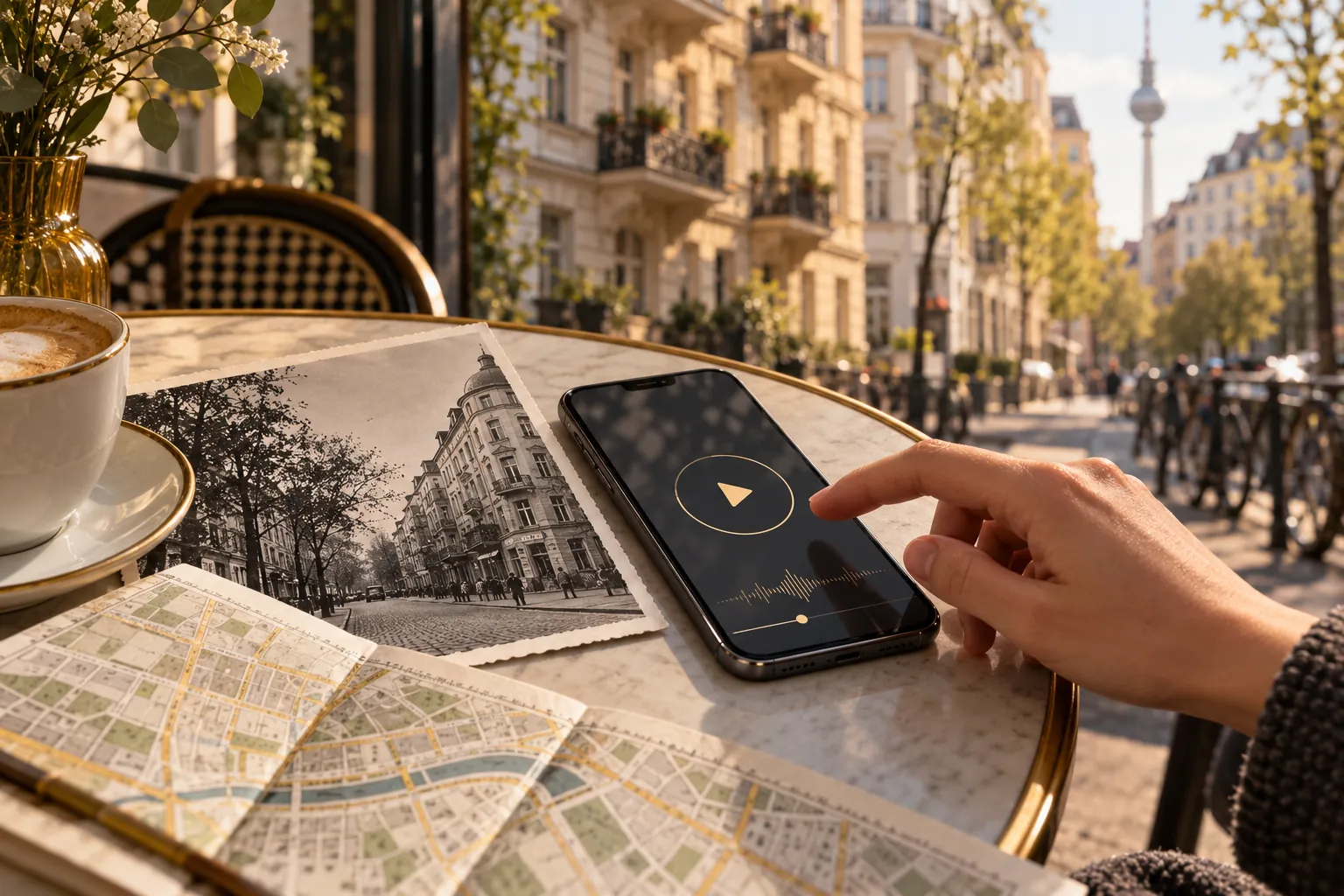
Ask a question you can explore on the spot
“Why does this entrance appear so large?” is a useful beginning. You can look at its height, the space in front and the surrounding windows. “Which period is this?” can quickly become guesswork if you lack the background information.
Other useful questions include: where does private space begin? How does light enter? Which elements repeat? What changes when you move to the opposite pavement? Stay on publicly accessible routes; an intriguing courtyard is not necessarily a public passage.
Compare before judging
Choose a second building and ask the same question. Comparison makes differences easier to describe. One entrance may be recessed while another opens straight onto the pavement. Record that arrangement before deciding whether it feels welcoming, monumental or convenient.
Our Friedrichshain walk and Charlottenburg walk offer possible areas to focus on. Either can be reduced to a few exterior views when time is limited, rather than becoming a full district tour.
Check dates and attribution
Berlin's State Monument Authority provides a list, map and database. The database includes search fields such as street and house number. Make sure the record concerns the building in front of you rather than a larger complex or a neighbouring property.
Record the stated construction period and any later alterations. A building's current appearance may differ substantially from its original design. Check an architect's attribution against the particular object instead of inferring it from a similar-looking facade.
Give your photographs useful notes
Take one overall view and one detail that illustrates your question. Add the address, viewing direction and source link. Those details let you understand later what you were comparing, rather than leaving you with an unidentified close-up.
If you want an earlier view, use the guide to finding historical street photographs. An audio story is especially useful when it draws attention to a visible feature and explains its significance with evidence. A worthwhile result is being able to describe one difference more precisely than before. That gives your next walk a stronger starting point.