Planning a Berlin Stolpersteine walk around individual lives
A walk to Berlin's Stolpersteine benefits from a small number of carefully prepared biographies. Choose a compact area and read about the people commemorated there. The inscription is a starting point. Further information can make a person's life visible beyond the circumstances of persecution and death.
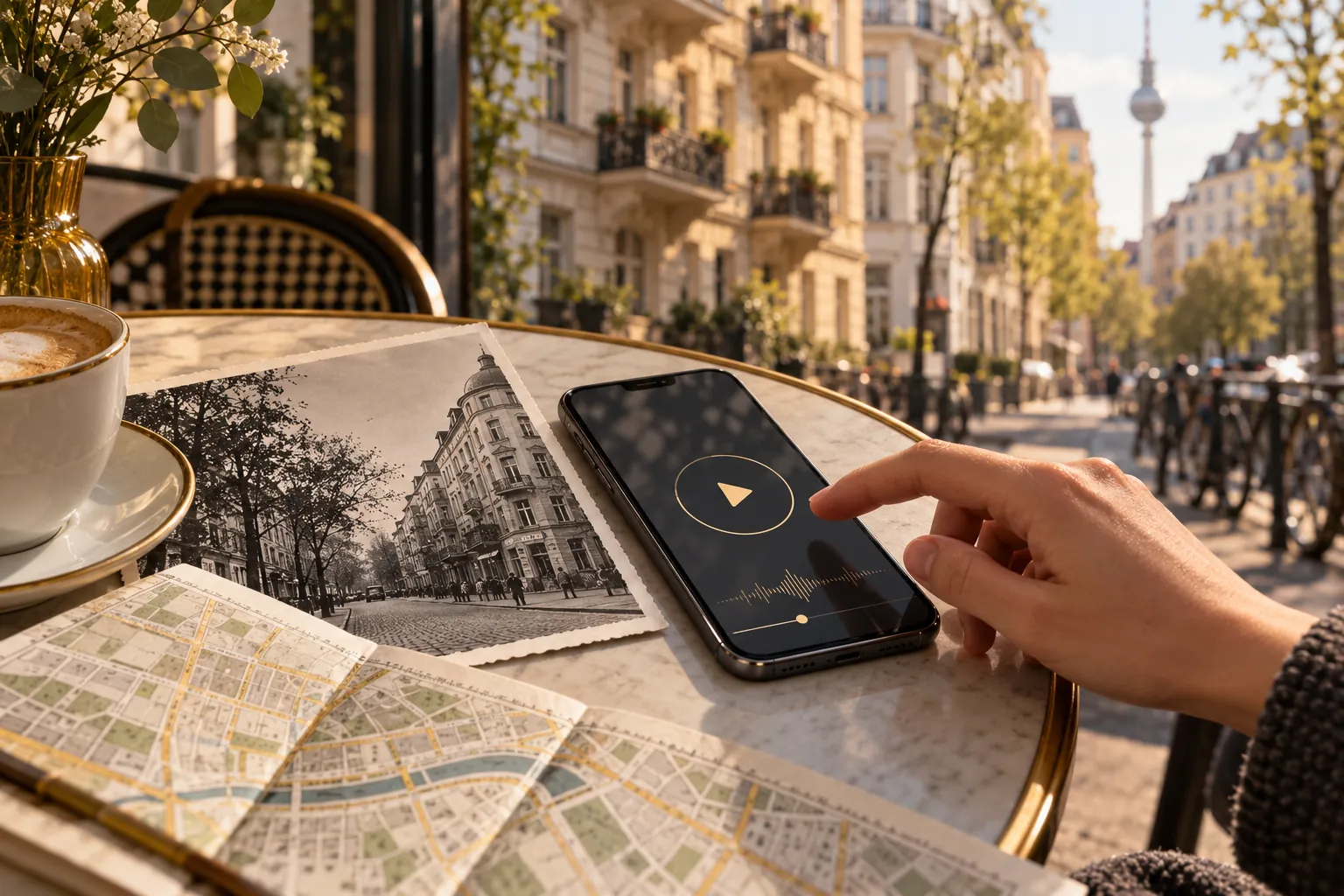
Start with an identifiable address
The Berlin Stolpersteine portal provides a way to find memorial stones and learn about the project. Select an address in your chosen area and open the available information. Save the name, location and specific record so that you do not have to sort through general search results on the pavement.
Add only a few nearby addresses. Their connection may simply be geographical; proximity does not establish that the people knew one another. Describe a personal relationship only when the records support it.
Read before setting out
Note what is known about work, family and everyday life. Keep track of missing information too. A gap in the record should not become an invented scene added to make the account more vivid.
The Staatsbibliothek's page about its Stolpersteine on Unter den Linden is one example of documented biographies. It explains the connection to former employees and research using different holdings. Use such material to learn about individuals rather than turning the outing into a count of stones visited.
Leave time to read at the location
Stand where others can continue using the pavement. Read the inscription and compare it with your notes. In a group, let everyone look before moving into an explanation or discussion.
If you use a recording, avoid broadcasting it through a speaker. Reading a biography quietly can be equally appropriate. For children, review both the subject matter and the way it is presented beforehand; our family audio-walk guide helps with that decision.
Keep one question for further research
Afterwards, save a precise reference and any unanswered question. If accounts differ, investigate the difference instead of immediately treating one version as certain. The guide to checking local history sources offers a practical method.
There is no need to follow the walk with several more memorial visits. Our article on visiting Berlin's memorials helps give those places their own time. A meaningful result is remembering individual people behind the names, rather than completing a long route.